1 Japanese Sword
The Convergence of Traditional Japanese Craftsmanship
and the Spirit of the Samurai
A Japanese sword is far more than a weapon.
From forging, clay tempering, quenching, and polishing to the shirasaya, koshirae, and sword fittings, every stage embodies centuries of Japanese craftsmanship and aesthetic tradition. Swordsmiths repeatedly forge materials such as tamahagane to create the unique jigane and hamon of the blade, while polishers, scabbard makers, metalworkers, and other craftsmen together bring the sword to completion.
Thus, in Japanese culture, the Japanese sword has long transcended its function as a weapon and become a symbol ofcraftsmanship, spirit, history, and character。
In particular, within the modern Japanese sword-making tradition, a swordsmith recognized by the Japanese government as a “Holder of an Important Intangible Cultural Property” (Living National Treasure) represents one of the highest cultural achievements in Japanese sword-forging craftsmanship.
The true value of a sword, however, lies in far more than the blade itself.
Who forged it, for whom it was made, why it was made, and what history it carries can all determine the true cultural value of a sword.
That is precisely what makes this pair of “Gi” swords so unique.
2 2011 Japan 3/11
The “Act of Gi” by Taiwanese Entrepreneur Yeh Hsin-tsun
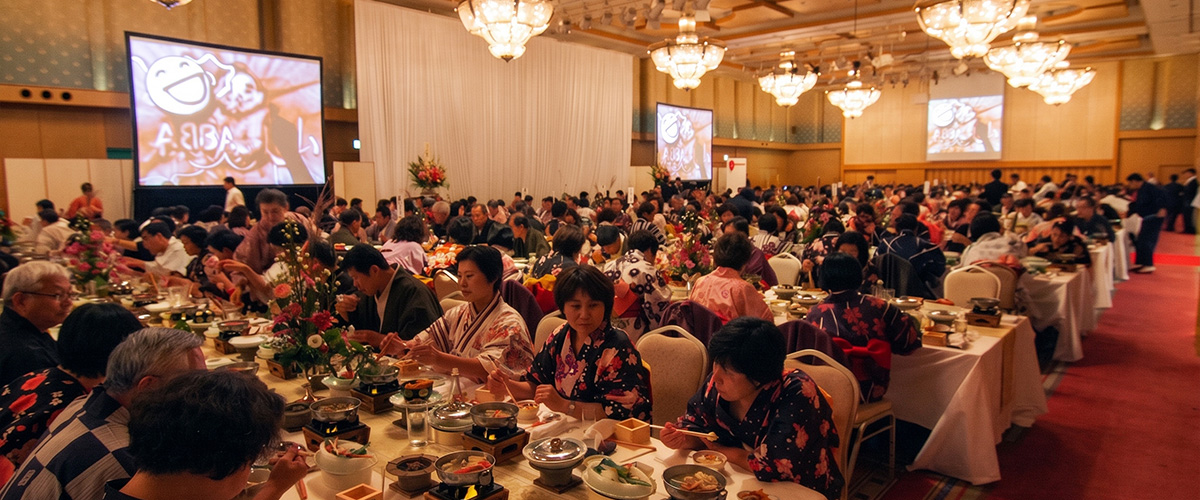
On March 11, 2011, the Great East Japan Earthquake struck Japan.
The disaster caused enormous loss of life and property and severely impacted Japan’s regional tourism industry. At the time, many overseas travelers remained hesitant about visiting Japan.
However, Taiwanese entrepreneur Yeh Hsin-tsun, motivated byGuided by the humanitarian spirit of “treating others’ suffering as our own,” and inspired by a deep respect for Japanese culture and the spirit of “Gi” (righteousness) embodied by Uesugi Kenshin, he resolved to take meaningful action to support Japan’s recovery in the aftermath of the disaster.
In October of the same year, Yeh Hsin-tsun ledmore than 500 company employeesto Niigata, Japan.
At a time when many foreign travelers were still reluctant to visit Japan, this journey was more than tourism; it was an effort to support the local tourism industry through actual spending and cultural exchange.
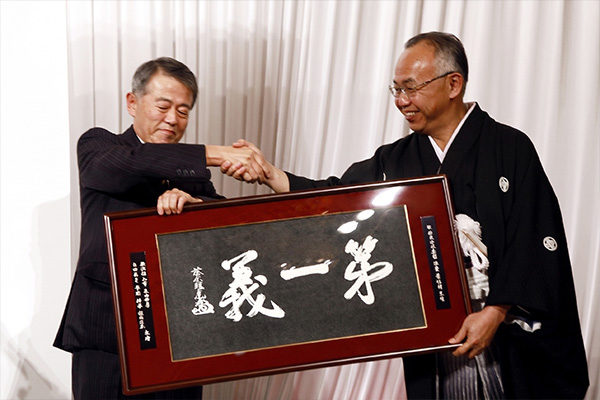
This support from Taiwan drew the attention and gratitude of the Niigata local government.
At the time, Niigata also presented「GI-NO-KOKORO」a cultural symbol associated with Uesugi Kenshin to express its gratitude for this cross-border support and friendship.
And through this exchange between Taiwan and Japan, “Gi” evolved from the historical spirit of Uesugi Kenshin into a story that truly came to life in the modern era.
3 Born from “Gi”
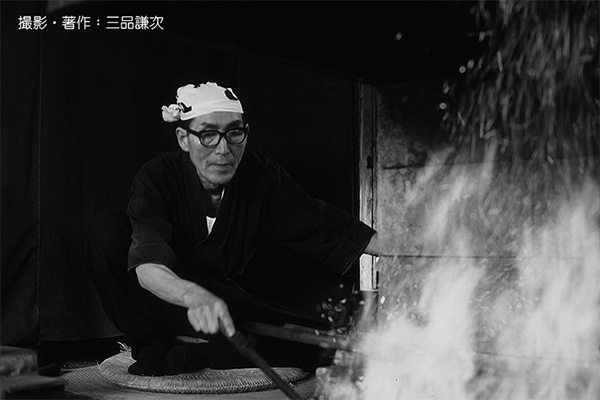
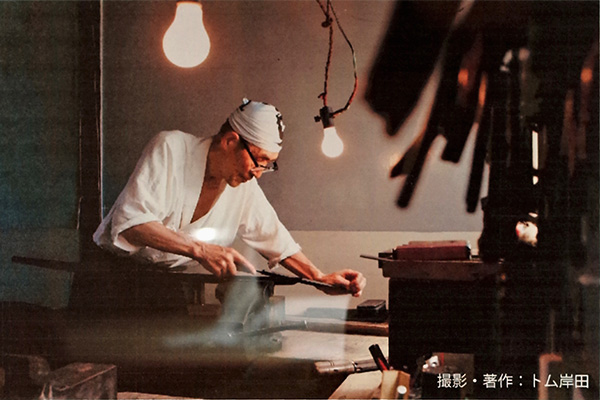
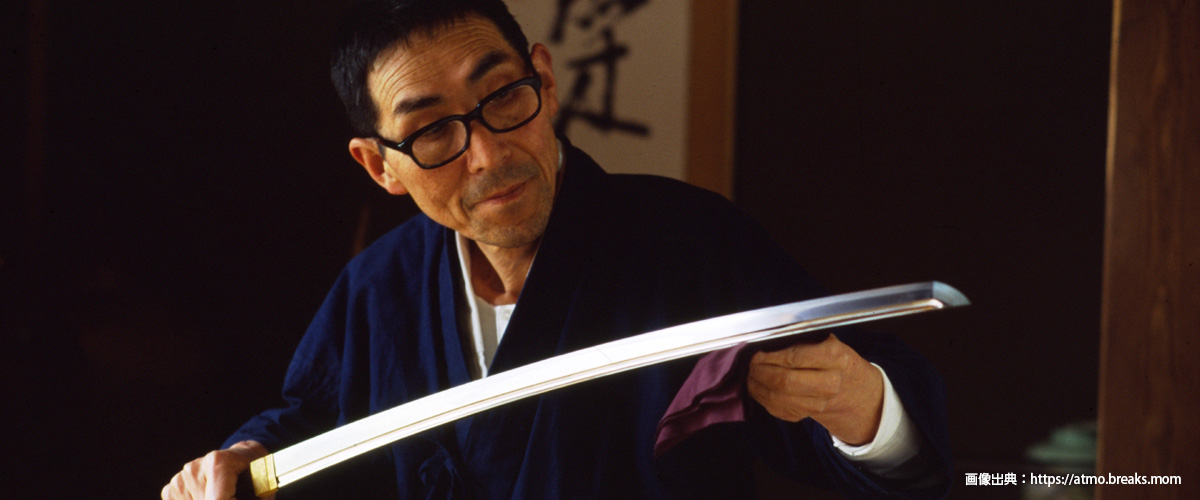
Living National Treasure Akitsugu Amata
A Sword Forged for a Foreigner
The most unexpected historical connection of this trip to Niigata emerged during the banquet that evening.
The Japanese swordsmith Akitsugu Amata, who attended the dinner, was a highly representative master of the Japanese sword-forging world and was recognized by the Japanese government as:
Holder of an Important Intangible Cultural Property (Living National Treasure)。
Throughout his life, Akitsugu Amata devoted himself to researching and practicing traditional Japanese sword-forging techniques, with particular emphasis on ancient forging methods and old iron. His works hold an important place in the field of Japanese sword collecting and research.
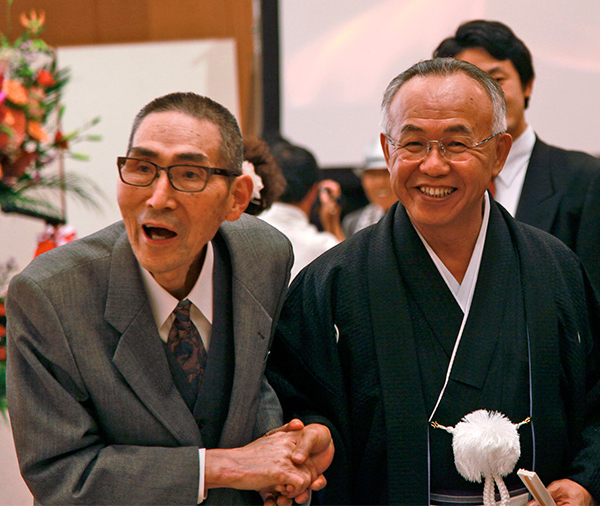
When Akitsugu Amata learned why Yeh Hsin-tsun had brought more than 500 employees to Niigata, and of his support for Japan’s regional tourism industry following the 2011 disaster, he was deeply moved.
During the dinner, Akitsugu Amata stated:
he was willing to personally forge a pair of swords for Yeh Hsin-tsun。
This pair of swords was not an ordinary work intended for the market.
Akitsugu Amata then asked:
“What would you like the theme of this pair of swords to be?”
Yeh Hsin-tsun’s answer was a single word:
「Gi」
This “Gi” represented both his admiration for Uesugi Kenshin’s spirit of “First Righteousness” and Yeh Hsin-tsun’s original resolve to support Japan through concrete action after the 2011 disaster.
Thus, goodwill from Taiwan and the sword-forging artistry of a Japanese Living National Treasure came together through the single word “Gi.”
4 「Gi」
A Masterpiece Representing the Culmination of Akitsugu Amata’s Career
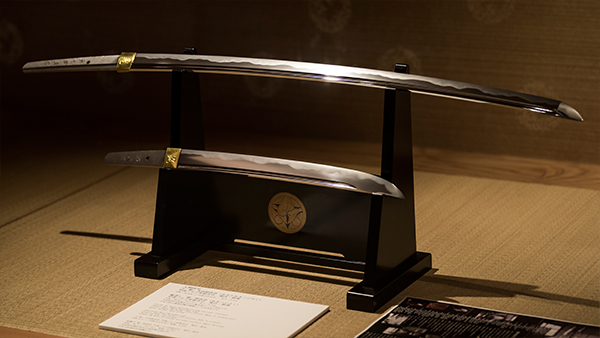
This pair of swords was completed in2013,at the final stage of Akitsugu Amata’s lifelong sword-forging career, when his art had reached maturity.
Rather than simply viewing it as a “late-period work,” it is more appropriate to understand it asthe concentrated embodiment, in the later stage of his creative career, of the skills, research, and spirit accumulated throughout Akitsugu Amata’s decades-long life as a swordsmith.
Throughout his life, Akitsugu Amata conducted in-depth research into traditional Japanese sword techniques, old iron, and forging methods. His works pursued not only the beauty of the blade, but also a balance among the quality of the steel, jigane, hamon, forging, and the spirit of traditional methods.
Therefore, the importance of this “Gi” pair lies not merely in the fact that it was made near the end of his life, but in that:
it embodies the mature culmination of a Living National Treasure swordsmith’s lifelong forging artistry and personal spirit.
Moreover, this work was not created for ordinary market circulation; it arose from Yeh Hsin-tsun’s act of Gi after the 2011 disaster and was created around “Gi” as its sole theme, giving it a distinctive and unique identity within Akitsugu Amata’s body of work.
The relevant production records, signature, year, and delivery documents provide complete supporting evidence, and this pair may be regarded asone of the most representative culminating works of Akitsugu Amata’s late creative career.
5 Akitsugu Amata「Eboshi」
A Symbol of the Swordsmith’s Identity and Spirit
This work also carries an exceptionally special significance for collectors.
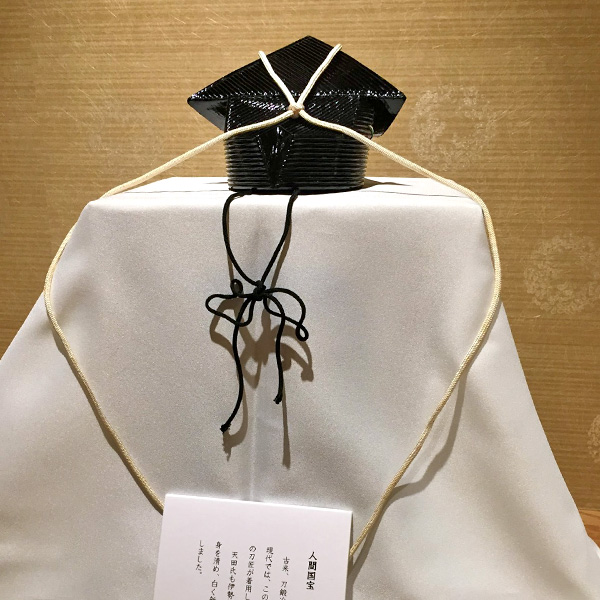
After the work was completed, Akitsugu Amata personally presented his own “eboshi” to Yeh Hsin-tsun.
An “eboshi” is not simply a hat.
In traditional Japanese culture, the eboshi carries deep historical and status symbolism. For traditional craftsmen, particular hats, garments, and rituals may also embody lineage, status, and the transmission of spirit.
Therefore, this eboshi is an item personally used by Mr. Akitsugu Amada for many years and personally presented by him to Mr. Nobumura Yo upon the completion of the works. As a result, the eboshi and this pair of swords share an exceptionally special “relationship between the person and the work.”
The sword is the craft Akitsugu Amata left through his own hands.
The eboshi, meanwhile, is a personal keepsake left by Akitsugu Amata himself.
One is a work of art; the other is an object personally used by the swordsmith. One carries the swordsmith’s craftsmanship; the other bears witness to the bond between the swordsmith and the collector.
The sword preserves his art; the eboshi preserves the man.
This makes「Gi」not only a pair of works left by Akitsugu Amata, but also a precious historical trace directly connected to the swordsmith himself.
6 Sword Fittings
The Other Half of a Famous Sword’s Life
The complete artistic value of a Japanese sword has never existed in the blade alone.
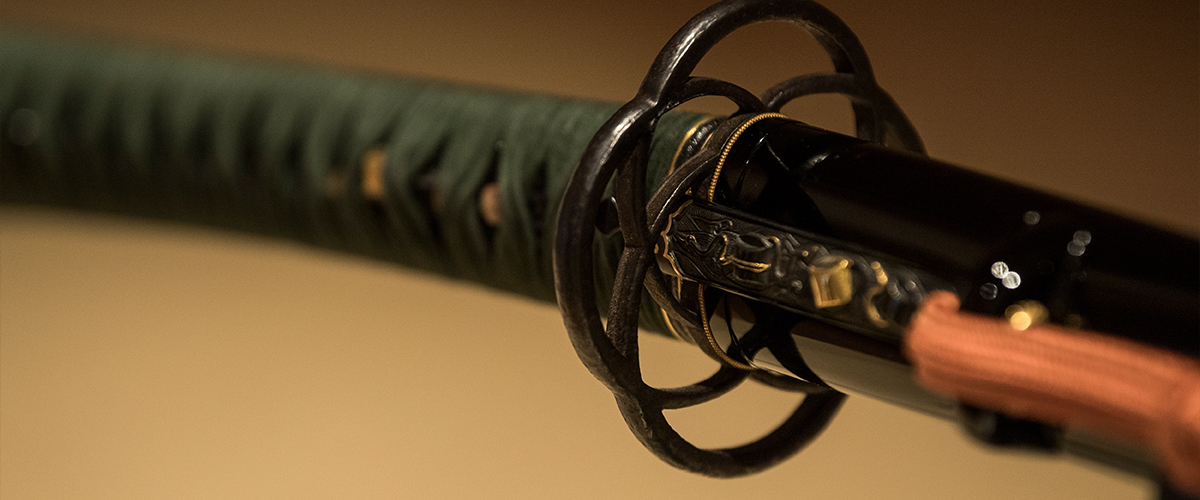
After the blade of a top-quality Japanese sword is completed, it still passes through various crafts, including polishing, shirasaya, koshirae, fittings, lacquerwork, and tsukamaki.
The swordsmith completes the “sword,” but it takes the combined craftsmanship of many artisans to create a complete “work of art.”。
Another important feature of this “Gi” pair is that its sword fittings are not a standard configuration, but were coordinated by Kazuyuki Takayama across the relevant traditional crafts.
If the blade is the soul of the work, the sword fittings are the body that gives that soul its visible form before the world.。
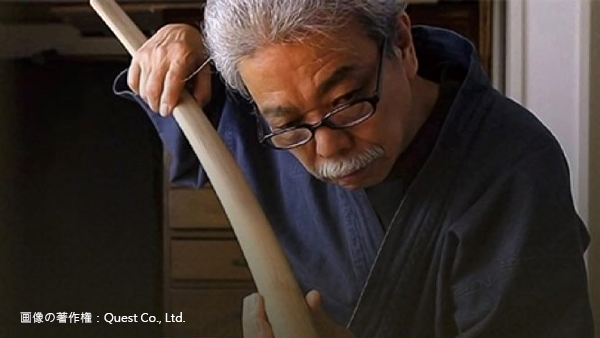
Kazuyuki Takayama
Overall Coordination of the Sword Fittings’ Aesthetics
Kazuyuki Takayama coordinated the sword fittings for this pair, allowing the “Gi” embodied in the blades to extend throughout the work as a whole.
The difficulty of Japanese sword fittings lies in the fact that they are not the work of a single craft, but a collaborative art involving many specialists.
Including:
Main functions:
Protects the hand and prevents it from slipping onto the blade.
Adjust the sword’s weight and balance, affecting its handling.
Provide decoration and artistic expression, later developing into an independent art of sword fittings.
Tsuba are commonly made of iron, shakudo, yamagane, gold, or silver, with engraved or openwork designs featuring dragons, flowers and birds, figures, family crests, landscapes, and more.
They mainly include:
■Tsuba(Crossguard):crossguard, The Protective Function of the Hand Guard.
■Fuchi-kashira: metal fittings at both ends of the handle.
■Menuki: decorative fittings on the handle that also serve a securing function.
■Habaki: a fitting at the base of the blade used to secure it.
■Seppa: thin metal plates on both sides of the tsuba used to secure it.
■Kogai and kozuka: auxiliary fittings included in some sword mounts.
Beyond their securing, protective, and practical functions, these fittings often use gold, silver, and shakudo, combined with techniques such as engraving, gold inlay, and zogan, making them an important part of traditional Japanese metalwork.
Main functions:
■Allows the wielder to grip and control the blade
■Built around a wooden core, covered with samegawa (sharkskin/fish skin), and then wrapped with tsukamaki (handle cord)
■Usually paired with fittings such as fuchi-kashira, tsuba, and menuki at both ends
Main functions:
■Grip: increases friction when held
■Stability: secures the handle structure and samegawa
■Absorption: improves comfort during prolonged handling
■Decoration: expresses style through different colors, materials, and wrapping methods
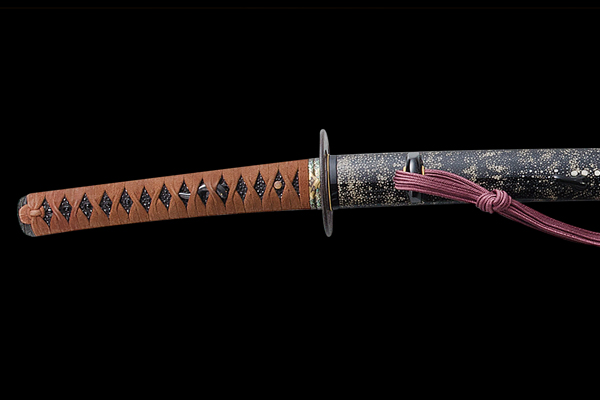
Tsukamaki is usually made from silk, cotton, or other fibers, forming interwoven diamond patterns according to the wrapping method.
Main functions:
■Protect the blade from impact and damage
■Protect the user by preventing the blade from being exposed
■Facilitate carrying and storage
■Also serve a decorative purpose, with surfaces that may be finished using lacquerwork, maki-e, and other techniques
The exterior of the saya may also be fitted with scabbard fittings such as kurikata and kojiri.
Main functions:
■Protect the scabbard: resists moisture and water and increases durability
■Decoration: creates effects in black, vermilion, gold, and other finishes
■Combined with techniques such as maki-e to create intricate patterns and ornamentation
Common lacquered saya include black roiro saya, vermilion-lacquered saya, and maki-e saya.
Main functions:
■Decorate the handle: often made with motifs such as dragons, tigers, lions, flowers, and birds
■Improve grip: provide friction and support for the palm and fingers
■Also help secure the handle: traditionally associated with the structure that holds the handle in place
Menuki are often made of shakudo, copper, silver, or gold, using techniques such as engraving and gilding.
■Fuchi: located at the end of the handle near the tsuba, securing and covering the handle core
■Kashira: located at the very end of the handle, also called the pommel
Main functions:
■Secure and protect the handle
■Reinforce the handle structure
■Decorate and beautify, often made together with menuki
■Kozuka: the handle and metal fitting of a small utility knife, usually paired with a kozuka blade and usable as a small tool
■Kogai: a slender metal tool traditionally associated with arranging hair and grooming a coiffure, later becoming an important decorative item
Both are often made from gold, silver, shakudo, and other materials, and may feature engraved motifs such as dragons, flowers and birds, or figures.
Main functions:
■Protect the blade and prevent moisture and corrosion
■Long-term collecting and preservation
■Not intended for elaborate decoration, but designed to emphasize ventilation, dryness, and protection of the blade
Shirasaya are usually made from honoki (Japanese magnolia), a fine-grained wood with low oil content that is unlikely to affect the blade.
Main functions:
■Protect against dust and scratches
■Prevent impacts to the scabbard
■Facilitate storage and transport
■Reduce direct contact between the sword fittings and the surrounding environment
Sword bags are usually made of silk, cotton, or other fabrics and may feature family crests or finely woven patterns.
Every detail requires a different area of expertise.
And what is most difficult about truly high-end sword fittings is not that they are “simply throwing money at them.” but rather:
to make the blade, sword fittings, and theme of the work resonate with one another and form a complete work of art.
Therefore, Kazuyuki Takayama’s value in this work lies not simply in “making the sword fittings,” but in fully expressing the spirit embodied in Akitsugu Amata’s blades and the theme of “Gi” through the visual language of the fittings.
7 What Makes It Truly Precious
A Collaborative Creation by
“Swordsmith × Sword Fittings Craftsman × Artisans”
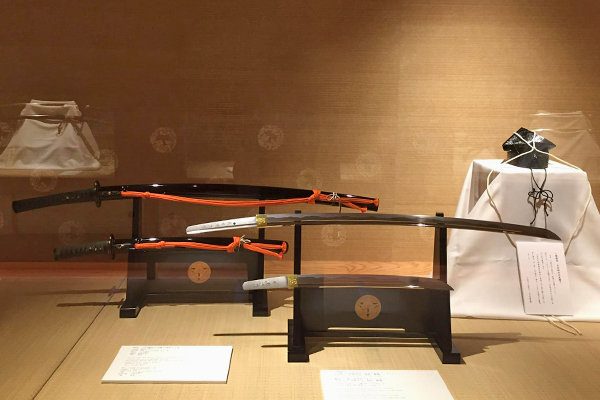
What makes this pair of swords truly noteworthy is that it is not the work of a single master craftsman.
It is a work completed collaboratively by leading craftsmen from different fields within Japan’s traditional craft system.
It can be understood as follows:
Layer 1: Akitsugu Amata
Responsible for the blades.
With decades of sword-forging experience, he forged “Gi” into the Japanese swords.
Layer 2: Kazuyuki Takayama
Responsible for coordinating and completing the sword fittings as a whole.
Elevating the blades from “swords” into complete works of art.
Layer 3: Specialized craftsmen
Individually responsible for crafts including polishing, shirasaya, koshirae, fittings, lacquerwork, and tsukamaki.
Each craftsman represents a specialized field within Japan’s traditional crafts.
Therefore, these two swords are not simply:
“A pair of swords forged by Akitsugu Amata.”
It is closer to:
「A comprehensive work of art centered on blades by Akitsugu Amata and completed collaboratively by craftsmen from various traditional Japanese crafts。」
This is what makes it very different from an ordinary Japanese sword collectible.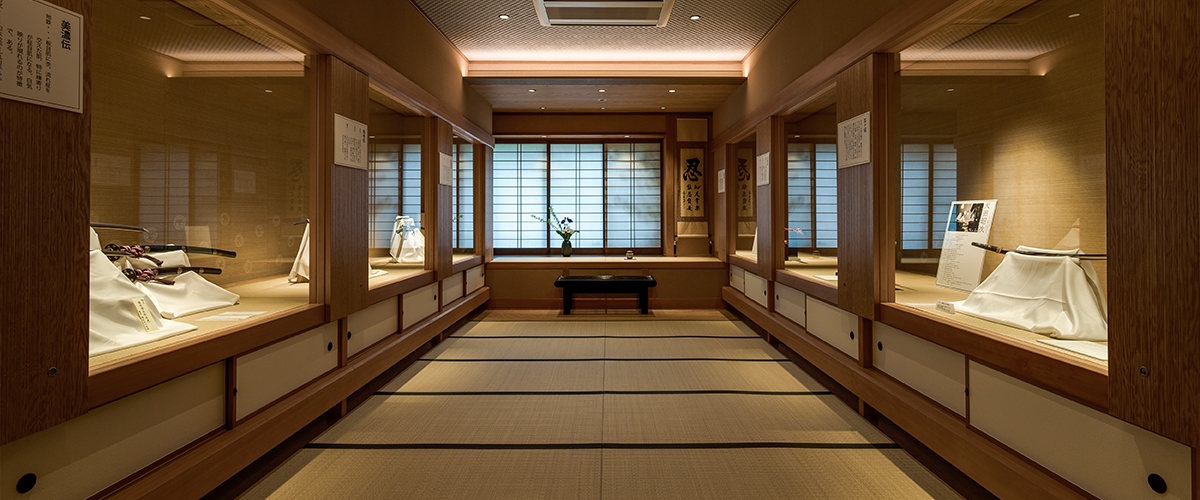
A Japanese sword can be made precious by its swordsmith; a work of art can become timeless through craftsmanship.
But “Gi” is unique because it simultaneously carries a real act of humanitarian goodwill, the conviction of a Taiwanese entrepreneur, the response of a Japanese Living National Treasure, and the collective dedication of Japanese traditional craftsmen.
Akitsugu Amata forged “Gi” through a lifetime of sword-forging artistry; Kazuyuki Takayama and numerous craftsmen completed its fittings through the skills they had cultivated throughout their lives.
The blades preserve Akitsugu Amata’s craftsmanship, the fittings embody the spirit of Japanese artisans, and “Gi” preserves a human bond that bridges Taiwan and Japan and transcends national borders.